Eli remains at Buchenwald until April 11. He has nothing to say of these last months in the concentration camps because after his father's death, he became indifferent and emotionless, concerned only with eating. He is transferred to the children's block.
On April 5, the SS guard is late to roll call, and everyone knows something must have happened. After two hours, an announcement goes out that all Jews must go to the assembly place. They to go to, but prisoners tell them to go back to their blocks warning them that the Germans are going to shoot everyone. On the way back, they learn that "the camp resistance organization had decided not to abandon the Jews and was going to prevent their being liquidated." The next day there is a roll call and the head of Buchenwald announces that the camp is to be liquidated. Ten blocks of deportees would be evacuated each day, and no more food would be distributed.
On April 10, the remaining 20,000 prisoners are to be evacuated and the camp blown up. A siren alert occurs and the evacuation is postponed to the next day. Nobody had eaten anything for six days. The next morning the resistance movement suddenly battles the SS in the assembly place. The SS flees, and resistance takes charge of the camp. At six in the evening, the first American tank arrives at Buchenwald.
The first thing the newly-freed prisoners thought of was food. Then, they thought of clothes and sex. Nobody thought of revenge. Three days after Buchenwald was liberated, Eli became deathly ill with food poisoning and spent two weeks in the hospital. After he got a little bit better, he gathered enough strength to look at himself in the mirror. He had not seen his reflection since living in the ghetto. When he looks at himself, he sees the eyes of a corpse, and that image has never left him.
Monday, June 2, 2008

Night: Section 8
At the camp the prisoners are counted as usual and told to go to the showers. However, they are so weak that it is difficult for the guards to get them to move. Eli's father goes over to a pile of snow with his son and tells him that he can no longer go on. Eli is enraged that his father is ready to die after having survived for so long and he argues with him for a long time not to stay in the snow. When the sirens go off, Eli is driven to the blocks and everyone immediately falls asleep in the beds. Not even realizing the soup couldron.
In the morning Eli remembers that he has to look for his father. Part of him wants to forget about his weak, burdensome father and he feels ashamed at these thoughts. Eli looks for his father for hours and finally finds him in the coffee line. Eli brings him a cup of coffee. Later on, Eli's father tells him that the guards are refusing to feed the sick because they think they will die soon anyway. Eliezer unwillingly gives him the rest of his soup and realizes that he is no better than that rabbi's son. On the third day of their arrival everyone has to go to the showers. Eli sees his father in the distance, but when he goes to meet him the man runs by him. The man was actually somebody else.
Eli's father is becoming increasingly weak in his bunk. He tells Eli where he buried the gold and money. Eli manages to bring his father to see a doctor, but the doctor refuses to look at him. Another doctor comes into the block, but Eliezer's father refuses to get up again. When Eli returns from getting bread his father tells him that his bunkmates have been hitting him. Eli promises them extra bread and soup, but they simply laugh at him. The next day his father tells Eli that his neighbors stole his bread and hit him again. He begs piteously for water and he gives him some.
The head of the block gives Eli advice regarding his father. He tells him that in the concentration camps, it is every man for himself and that ties of family and friendship no longer count. He advises him not to give his food rations to his father and to instead his father's for himself. For a moment Eliezer agrees with him, but then immediately feels guilty. Eli's father begs repeatedly for water one night, and the SS guards shout at him to be quiet. When he keeps calling out to Eliezer, the guard hits him violently on the head with his truncheon. Eliezer is afraid to move from his bunk. His father once again says, "Eliezer," and is still breathing. After roll call he looks at his father's face for over an hour. When it is time to go to bed, his father is still alive. The next day, January 29, 1945, his father has been replaced by another invalid and taken to the crematory. Eliezer does not weep and admits that deep down inside himself he feels freed by his father's death
In the morning Eli remembers that he has to look for his father. Part of him wants to forget about his weak, burdensome father and he feels ashamed at these thoughts. Eli looks for his father for hours and finally finds him in the coffee line. Eli brings him a cup of coffee. Later on, Eli's father tells him that the guards are refusing to feed the sick because they think they will die soon anyway. Eliezer unwillingly gives him the rest of his soup and realizes that he is no better than that rabbi's son. On the third day of their arrival everyone has to go to the showers. Eli sees his father in the distance, but when he goes to meet him the man runs by him. The man was actually somebody else.
Eli's father is becoming increasingly weak in his bunk. He tells Eli where he buried the gold and money. Eli manages to bring his father to see a doctor, but the doctor refuses to look at him. Another doctor comes into the block, but Eliezer's father refuses to get up again. When Eli returns from getting bread his father tells him that his bunkmates have been hitting him. Eli promises them extra bread and soup, but they simply laugh at him. The next day his father tells Eli that his neighbors stole his bread and hit him again. He begs piteously for water and he gives him some.
The head of the block gives Eli advice regarding his father. He tells him that in the concentration camps, it is every man for himself and that ties of family and friendship no longer count. He advises him not to give his food rations to his father and to instead his father's for himself. For a moment Eliezer agrees with him, but then immediately feels guilty. Eli's father begs repeatedly for water one night, and the SS guards shout at him to be quiet. When he keeps calling out to Eliezer, the guard hits him violently on the head with his truncheon. Eliezer is afraid to move from his bunk. His father once again says, "Eliezer," and is still breathing. After roll call he looks at his father's face for over an hour. When it is time to go to bed, his father is still alive. The next day, January 29, 1945, his father has been replaced by another invalid and taken to the crematory. Eliezer does not weep and admits that deep down inside himself he feels freed by his father's death
Night: Section 7
Inside the train bodies, both dead and alive, are tangled up in each other. Eli feels indifferent to everything. Eli's father does not respond to his call and seems dead. When the train stops SS officers order that corpses be thrown out of the car. Two men begin to throw Eliezer's father out of the train, but Eliezer revives him by slapping him viciously and screaming desperately in his face. Twenty bodies are thrown out of the wagon. The prisoners travel for ten days, eating only snow.
Once, some German workmen begin throwing bread into the car and stand around watching as the prisoners tear each other to death for scraps. Eli resolves not to fight for the food and notices one man who kills his own father for a piece of bread. Then the son is killed for the same bread and both father and son lie dead side by side. Eli notes at this point in the narrative that he is fifteen years old.
On the third night of the journey Eli is awakened when someone randomly tries to strangle him. He calls his father at the last minute and is saved by a man named Meir Katz, who had been a gardener at the Buna camp. However, a few days later Meir Katz begins to cry, having finally lost his will to live.
On the last day of the journey, there is a bitter wind, and everyone gets up in order to try to keep warm. All the prisoners begin imitating the death cry of a fellow prisoner, and Meir Katz wonders out loud why the SS guards don't just shoot them all right away. Finally, they reach the camp, and only twelve people have the strength to leave the wagon. The others, including Meir Katz, remain on the train to die. They are at Buchenwald.
Once, some German workmen begin throwing bread into the car and stand around watching as the prisoners tear each other to death for scraps. Eli resolves not to fight for the food and notices one man who kills his own father for a piece of bread. Then the son is killed for the same bread and both father and son lie dead side by side. Eli notes at this point in the narrative that he is fifteen years old.
On the third night of the journey Eli is awakened when someone randomly tries to strangle him. He calls his father at the last minute and is saved by a man named Meir Katz, who had been a gardener at the Buna camp. However, a few days later Meir Katz begins to cry, having finally lost his will to live.
On the last day of the journey, there is a bitter wind, and everyone gets up in order to try to keep warm. All the prisoners begin imitating the death cry of a fellow prisoner, and Meir Katz wonders out loud why the SS guards don't just shoot them all right away. Finally, they reach the camp, and only twelve people have the strength to leave the wagon. The others, including Meir Katz, remain on the train to die. They are at Buchenwald.
Monday, May 26, 2008
Night: Section 6
The section begins with the all the prisoners on a run. The SS shoot all of those prisoners that cannot keep up and fall behind. Eli keeps himself motivated to run, by the thought of his father. When they come to a deserted village for a rest stop, Eli father takes Eli to ruined brick factory and keeps him awake, so he wouldn't suffer from being frozen. A rabbi comes into the factory to search for his son, eli doesn't tell the kind man that his son tried to save himself by outrunning his parent. At the thought of this Eli is disturbed and he prays that he will never do that to his father.

The next day even the SS are getting tired of this fight against the cold and snow. When the arrive at Gleiwitz, Kapos assigns the prisoners to brracks. In the mist of things Eli is almost crush by the marauding horde of people rushing into it. Yet, he see his friend Juliek, who is carrying a violin with him. Juliek plays a part of Beethovens concerto, but the next morning sadly Juliek lay dead next to his crushed violin.
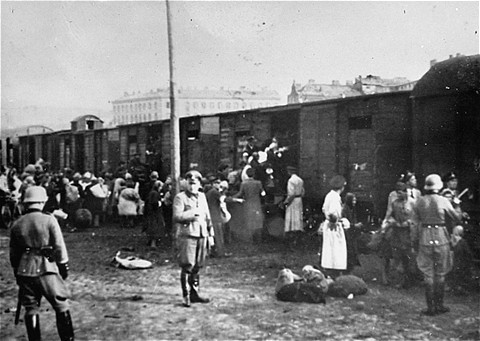 For 3 days the prisoners are given no food or water, but at the dawn of the 3rd day Eli rushes to get his father from one of the SS selections. Not long after the prisoners are marched to the rail lines and are given a little piece of bread. The SS solidiers laugh at the prisoners when they eat the snow to quench their thirst. Later in the day, a train arrives with roofless cattle wagons. The SS take the prisoners and pack a 100 of them into each of the cars.
Sunday, May 18, 2008
Night: Section 5

The section starts off with the arrival of the Jewish holidays of Rosh Hashanah, which celebrates the coming of the new year, and Yom Kippur, the day of Atonement. Even though they are imprisioned the Jews of Buna come together and celebrate, but Eli's religious beliefs have seemed to have dissappeared. He connot fund a good enough reason to bless God in the presence of all this suffering. He later mocks the Jewish peoples idea of them being God's chosen people and that same God deciding to massacre all these people. Finally he comes to the decision that man has a stronger will than God. Feeling alone in the crowd Eli finds comfort in his fathers face because he sees a great dispair of his dads face. So on Yom Kippur, a day which Jews traditionally fast, he decided to eat.
Soon after the holiday is over another round of selections is made and Eli is separated from his father to work in the building unti. Yet he worries greatly about his father, whom he doesnt know will pass the selection. Days later he finds out his father did not pass the selection and he will executed. Eli's father comes to him a gives him his knife and spoon, Eli's only inheiritance. Thinking that he will never see him again, Eli is overjoyed when he see that there was another selection and his father had survived, but their friend Akiba Drumer isnt so lucky and looses faith and he later dies. Eli confides in a Rabbi and tells him that he can no longer believe in God because of what he has seen at these camps.

Winter comes along, but for Eli this isnt good, His foot begins to sweel and he goes into operation for it. While recovering a rumor of the Russion army gives the prisoners new hope. The Germans catch wind of the rumor and decide to evacuate the camps before the Russians arrive. Eli and his father make a fatal mistake of leaving the infirmary because they think the would be put to death, but they later learn that all those that stayed in the infirmary were freed days later by the russians.
Sunday, May 11, 2008
Night: Section 4
When we last left of Eli and his dad they were going in to be inspected by the Nazi's to make sure they were clean and tidy. Going through inspection Eli is chosen by a Kapo to serve in this unit that counts the eletrical fittings for the civilian warehouse, luckily his father turns out to serve in the same exact unit. ELi and his father are housed in the "musicians block" were he meets a fellow named Juliek and his two brothers.
Eli is summoned to a dentist to get his gold corwn removed but says that he is sick and has the procedure delayed. It turns out that the dentist was making shady deals and tradeing off the gold teeth, but he is found out and is hanged for it. Eli would be sorry for the man but other problems arise for young eli. Idek, the man in charge of Eli's group, randomly beats Eli because of a french girl who offers Eli a small act of kindness and comfort. Then Eli's dad becomes a victim of Idek's rampages, and Eli becomes mad at him for his inability to dodge his attacks.
Then the prison foreman, Franek, notices that Eli still has his gold crown and he must have it. The only problem is that Franek has a lust for gold and it makes him vicious, mean, and cruel. Eli's dad tells him to not give him the tooth, but Franek takes his dad and beats him until Eli gives in. Not long after this incident Eli's group is moved to another camp, but Eli makes a accidental mistake and see's Idek having sex, so his punishment Eli is whipped until he finally looses consciousness.
The story then goes on to explain numerous accounts of people during air raids attempting to steal something. On one account a man tries to go to the unattended soup pot and get something to eat but as he nears the soup and is about to take a bite to eat he is shot in the back. After all these stories are told it goes to Eli and him questioning God yet again.
Eli is summoned to a dentist to get his gold corwn removed but says that he is sick and has the procedure delayed. It turns out that the dentist was making shady deals and tradeing off the gold teeth, but he is found out and is hanged for it. Eli would be sorry for the man but other problems arise for young eli. Idek, the man in charge of Eli's group, randomly beats Eli because of a french girl who offers Eli a small act of kindness and comfort. Then Eli's dad becomes a victim of Idek's rampages, and Eli becomes mad at him for his inability to dodge his attacks.
Then the prison foreman, Franek, notices that Eli still has his gold crown and he must have it. The only problem is that Franek has a lust for gold and it makes him vicious, mean, and cruel. Eli's dad tells him to not give him the tooth, but Franek takes his dad and beats him until Eli gives in. Not long after this incident Eli's group is moved to another camp, but Eli makes a accidental mistake and see's Idek having sex, so his punishment Eli is whipped until he finally looses consciousness.
The story then goes on to explain numerous accounts of people during air raids attempting to steal something. On one account a man tries to go to the unattended soup pot and get something to eat but as he nears the soup and is about to take a bite to eat he is shot in the back. After all these stories are told it goes to Eli and him questioning God yet again.
Sunday, May 4, 2008
Night: Section 3
Now when we last left off the Jews were being taken to Birkenau, when they arrived there they found that some of the weaker individuals are going to be weeded out to be killed, Yet Eli and his dad remain together at this point. Sadly Eli's mother and younger sister are never seen again by Eli and his dad. As the weeding out is taking place, a prisoner tells them to lie about their age saying that Eli, who is almost 15, to say he is 18 and his dad, who is 50, to say he is 40. When the head officer asks him he takes the advice saying he is 18 and that he is a farmsmen. His dad takes the advice also and thankfully they are motioned in the same direction and are still together.
Traveling through the camp the find several huge pits full of adults, children, and babies all being burned. Eli and many other cant accept how people can be doing this, but someone in the group starts saying a prayer, called the Kaddish or prayer for the dead, yet Eli begins to question God and asking what to thank God for. When Eli and his dads group are near the edge of a empty pit they are the switched to move into the barracks. The barracks was a really nice place, while in there the Jews were stripped of their clothes, heads were shaved, disinfected with gasoline, showered, and clothed in prison uniforms.
Coming out of the barracks they were given two options: very hard work or death. Eli and his dad chose hard work and are marched to Auschwitz, where they are quartered for three weeks. They then recieve their prison number tattooed on their arms. While there Eli meets a distant relative from a neighboring town. His name is Stein and he tells them new of his family. In return ELi tries to comfort him by saying that his family is alive and well, but he soon fines this out to be a lie.
Traveling through the camp the find several huge pits full of adults, children, and babies all being burned. Eli and many other cant accept how people can be doing this, but someone in the group starts saying a prayer, called the Kaddish or prayer for the dead, yet Eli begins to question God and asking what to thank God for. When Eli and his dads group are near the edge of a empty pit they are the switched to move into the barracks. The barracks was a really nice place, while in there the Jews were stripped of their clothes, heads were shaved, disinfected with gasoline, showered, and clothed in prison uniforms.
Coming out of the barracks they were given two options: very hard work or death. Eli and his dad chose hard work and are marched to Auschwitz, where they are quartered for three weeks. They then recieve their prison number tattooed on their arms. While there Eli meets a distant relative from a neighboring town. His name is Stein and he tells them new of his family. In return ELi tries to comfort him by saying that his family is alive and well, but he soon fines this out to be a lie.
Subscribe to:
Posts (Atom)